
From 29 September to 1 October 2026, the European cancer research and innovation community came together in Brussels for “5 Years EU Cancer Mission: Stronger Through Connection”, a three-day event organised by the European Commission to reflect on progress achieved during the first five years of the EU Cancer Mission and, importantly, to look ahead towards its 2030 objectives. Researchers, clinicians, patients, policymakers, innovators and industry representatives gathered to discuss how European collaboration can accelerate progress across cancer prevention, early detection, diagnosis, treatment and quality of life.
A powerful message set the tone from the beginning. In his opening remarks, Marc Lemaître, Director-General for Research and Innovation at the European Commission, highlighted that the EU Cancer Mission and Europe’s Beating Cancer Plan demonstrate what Europe can achieve when countries work together around a common challenge. The emphasis was clear: the next phase must be about transforming excellent research and innovation into tangible impact for citizens and patients, connecting research, healthcare, policy and implementation rather than allowing progress to remain within individual projects or national boundaries.
This message strongly reflects the philosophy of ONCOSCREEN. As an EU Cancer Mission project, ONCOSCREEN is developing a European “shield” against colorectal cancer through novel, more precise and affordable risk-based screening approaches and viable policy pathways. Its ambition extends beyond developing individual technologies: ONCOSCREEN aims to bring together innovative screening methods, risk stratification, AI-supported tools, clinical evidence and policy-oriented approaches that can ultimately contribute to more accessible and effective colorectal cancer screening across Europe.
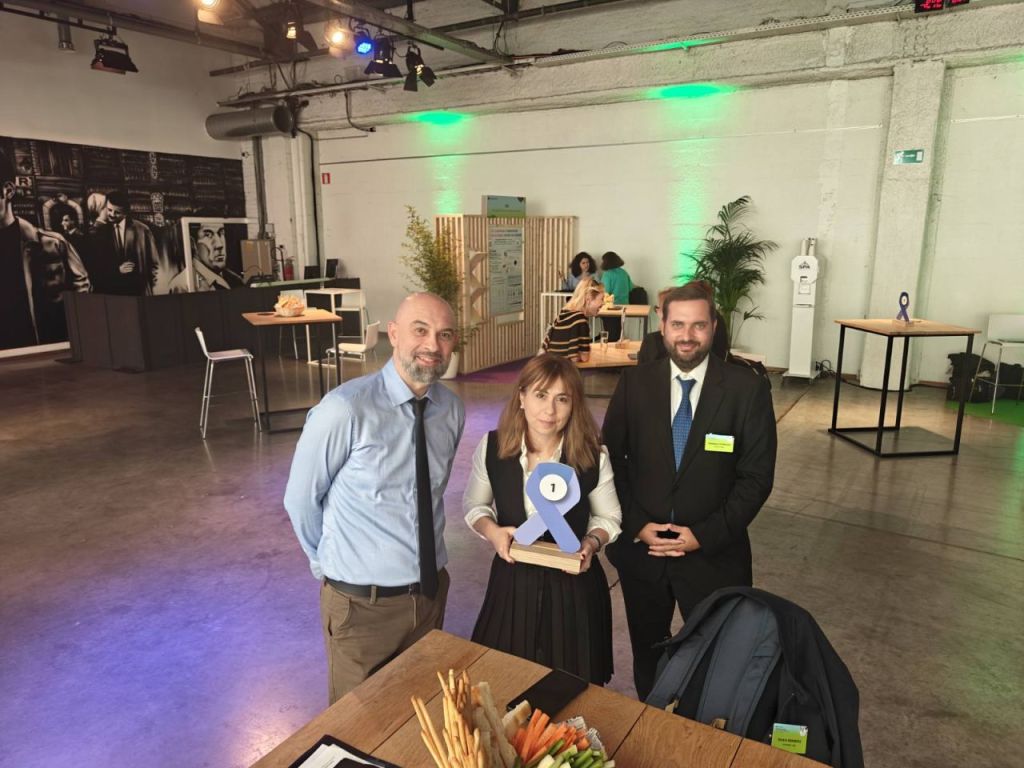
Across the three days, the programme mirrored many of the challenges that ONCOSCREEN is addressing. Day 1 focused strongly on cancer data, better research models, data exchange, imaging and AI-enabled precision oncology—highlighting the importance of trustworthy, interoperable and clinically meaningful use of data. Day 2 placed prevention and early detection at centre stage, with dedicated sessions on prevention strategies and innovative early-detection approaches. This was a particularly important day for ONCOSCREEN, which was featured in the project exhibition and presented its work to the wider Cancer Mission community. An invited contribution also provided an opportunity to share the project’s perspective and progress and to discuss how innovation in screening can move from research towards real-world implementation. HaDEA specifically highlighted ONCOSCREEN among the Mission projects showcased on Day 2 for its work on new technologies and methods for colorectal cancer screening and early detection.
Day 3 broadened the discussion towards diagnosis and treatment, including how innovation can reach patients, how personalised care can remain affordable and accessible, the particular needs of rare cancers, and how clinical research can generate real Mission-level impact. These discussions reinforced a recurring theme across the event: technological excellence alone is not enough. Innovation must be clinically validated, accessible, sustainable and capable of being integrated into healthcare systems.
For ONCOSCREEN, the three days in Brussels offered much more than an opportunity to present project results. They provided a valuable setting to exchange experiences with other Cancer Mission initiatives, identify synergies and strengthen the connections needed to turn research into better colorectal cancer prevention and earlier detection for citizens across Europe. The event’s central message—stronger through connection—is therefore also highly relevant to ONCOSCREEN’s own journey: bringing technology, clinical evidence, citizens, healthcare professionals and policy together to create screening solutions that can make a lasting difference.